Class 8 English Bodo Medium Question Answer – Lesson 4: "Louis Pasteur"
Lesson-5
Louis Pasteur
(लुइस पास्टार)
ACTIVITIES
1. Answer the following questions to check your understanding:
(गावनि बुजिनायखौ नायग्रोमनो थाखाय गाहायाव होनाय सोंथिफोरनि फिन हो।)
(a) What happened one day while Louis Pasteur was playing with his friends?
(सानसेखालि मा जादोंमोन जेब्ला लुइस पास्टार आ गावनि लोगोफोरजों गेलेगासिनो दंमोन?)
Ans: one day while Louis Pasteur was playing with his friends, he saw a man running towards him. The man was very frightened because someone had been bitten by a mad wolf from the mountain.
(सानसेखालि जेब्ला लुइस पास्टार आ गावनि लोगोफोरजों गेलेगासिनो दंमोन, अब्ला बिथाङा सासे मानसिखौ गावनि फारसे खारबोनाय नुदोंमोन। बे मानसिया जोबोद गिदोंमोन मानोना सोरबा हाजोनिफ्राय फैनाय मासे फाग्ला सियालजों अरजादोंमोन।)
(b) What does rabies cause in human beings? (रेबिसा मानसिनाव मा सोमजिहोयो?)
Ans: Rabies is a viral disease that causes inflammation of the brain in humans and other mammals. Animals with rabies go mad and die.
(रेबिसआ मोनसे सनदेरग्रा/गोसारग्रा बेराम जाय मानसिफोर आरो गुबुन आहार जाग्रा जिबफोरनि मेलेमाव बुनाय/सानाय सोमजिहोयो। रेबिस गोनां जुनारफोरा फाग्ला जायो आरो थैयो।)
(c) What experiments did Pasteur conduct on rabbits?
(पास्टार आ सेसाफोरनि सायाव मा आनजाद नायदोंमोन?)
Ans: In his experiments, Louis Pasteur treated the ailing rabbits by injecting them with the same virus and succeeded in curing them.
(गावनि आनजाद नायनायाव, लुइस पास्टार आ बे बेरामगोनां सेसाफोरखौ एखे भायरासजों इन्जेकसन होनानै फाहामदोंमोन आरो बिसोरखौ फाहामनायाव जाफुंसारदोंमोन।)
(d) Who was Pasteur's first human patient? Was his treatment successful?
(पास्टारनि गिबि सुबुं बेरामिया सोरमोन? बिनि फाहामथाइया जाफुंसारदों नामा?)
Ans: Pasteur’s first human patient was a school boy who was bitten by a mad dog. Yes, his treatment was successful.
(पास्टारनि गिबि सुबुं बेरामिया सासे स्कुल फरायसामोन जायखौ मासे फाग्ला सैमाया अरदोंमोन। नंगौ, बिनि फाहामथाइया जाफुंसारदोंमोन।)
(e) When and where did the French government establish the Pasteur Institute? What is it famous for?
(फ्रेन्स सोरखारा माब्ला आरो बबेयाव पास्टार फसंथानखौ गायसनदोंमोन? बेयो मानि थाखाय मुंदांखा?)
Ans: In 1888, the French government established the Pasteur Institute in Paris. It is famous for the study of biology, micro-organisms, diseases, and vaccines.
(1888 मायथाइयाव, फ्रेन्स सोरखारा पेरिसआव पास्टार फसंथानखौ गायसनदोंमोन। बियो जिब बिगियान, फिसा जिब, बेराम आरो टिकाफोरनि बिजिरनायनि थाखाय मुंदांखा।)
2. You must have noticed that the lesson has many words related to diseases. Read the lesson carefully and note down all these words in the word web below. One has been done for you. ( नोंथाङा नायबाय जानांगौ दि बे फरायनायाव बेरामजों सोमोन्दो थानाय गोबां सोदोबफोर दं। फरायनायखौ सांग्राङै फराय आरो बेफोर गासैबो सोदोबफोरखौ गाहायाव थानाय वेब सोदोबआव लिरना दोन। मोनसेखौ नोंनि थाखाय खालामनाय जाबाय।)
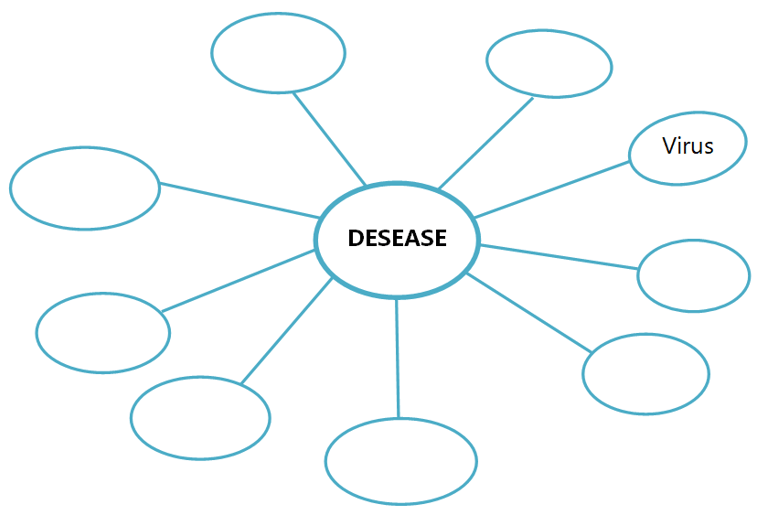
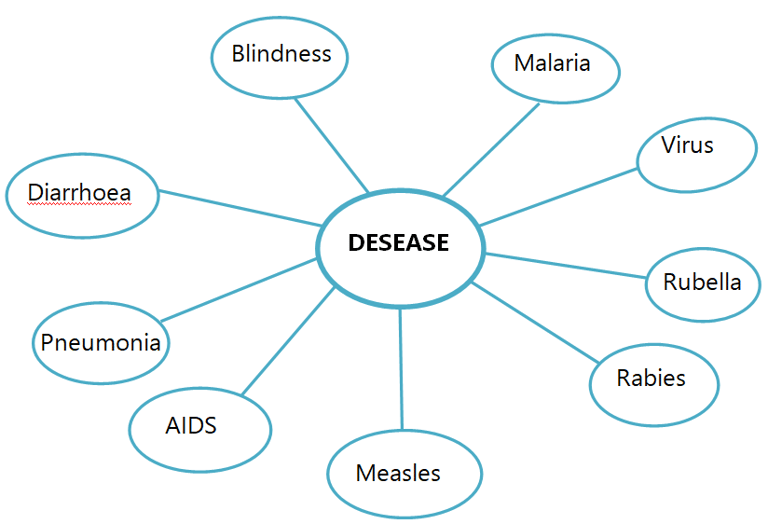
Ans:
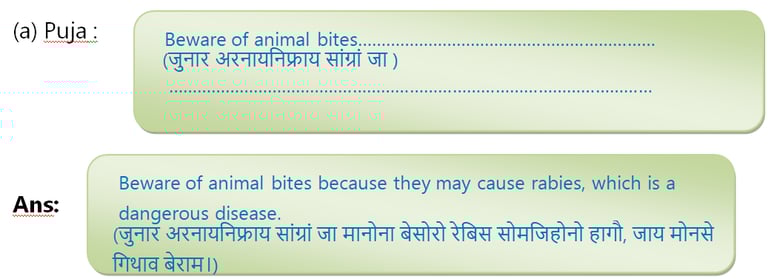
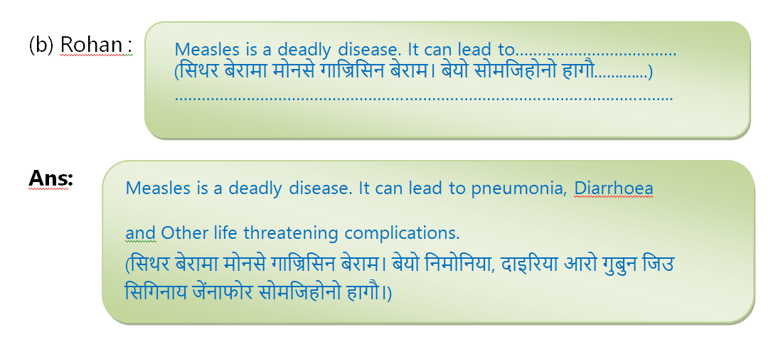
3. Here are five friends sharing information about diseases. Complete their dialogues with information from the lesson.( बेवहाय मोनबा लोगोफोरा बेरामफोरनि सोमोन्दै खौरां रानलायगासिनो दं। बिसोरनि बाथ्रा दान्थेलायनायफोरखौ फरायनायनिफ्राय खौरांजों आबुं खालाम।)


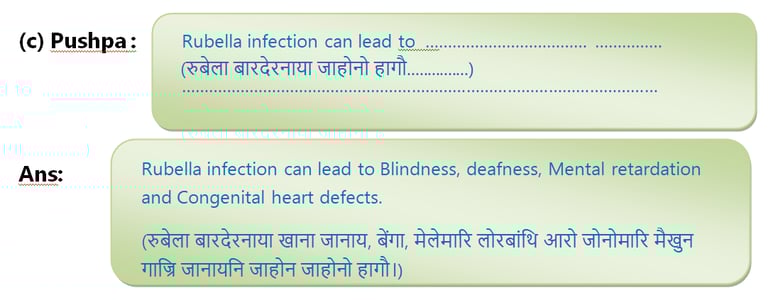

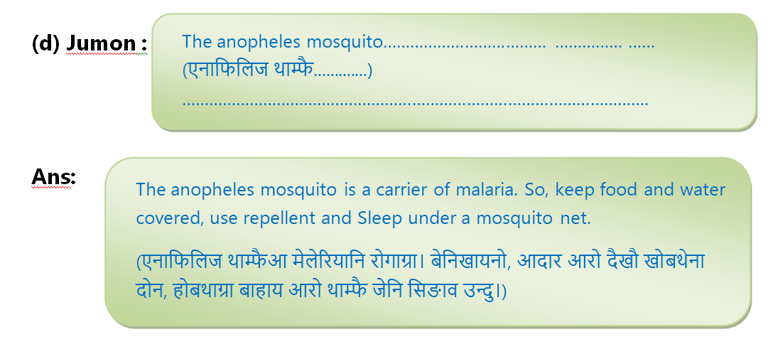
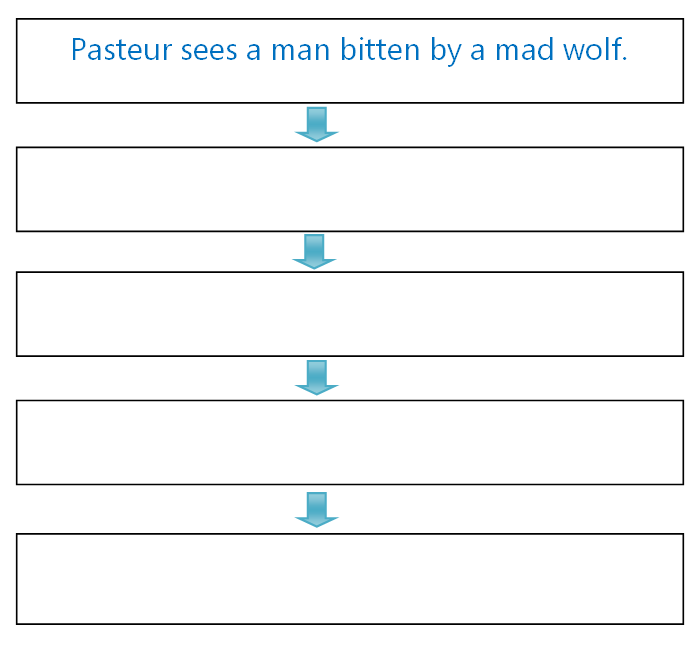
4. Do you know what a flowchart is? It is a diagram that shows how one thing leads to the next. Read the lesson once again and complete the flowchart to show the chain of events. The first entry has been inserted for you. (नों मिन्थियो नामा फ्ल'चार्टआ मा? बेयो मोनसे सावगारि जाय दिन्थियो दि माबोरै मोनसे मुवाया गुबुन मोनसेसिम दैदेनो। फराखौ फिन खेबसे फराय आरो जाथायफोरनि फारिखौ दिन्थिहोनो थाखाय फ्ल'चार्टखौ आबुं खालाम। नोंथांनि थाखाय गिबि रेबगान्थिखौ सोदेरनाय जाबाय।)

Ans:
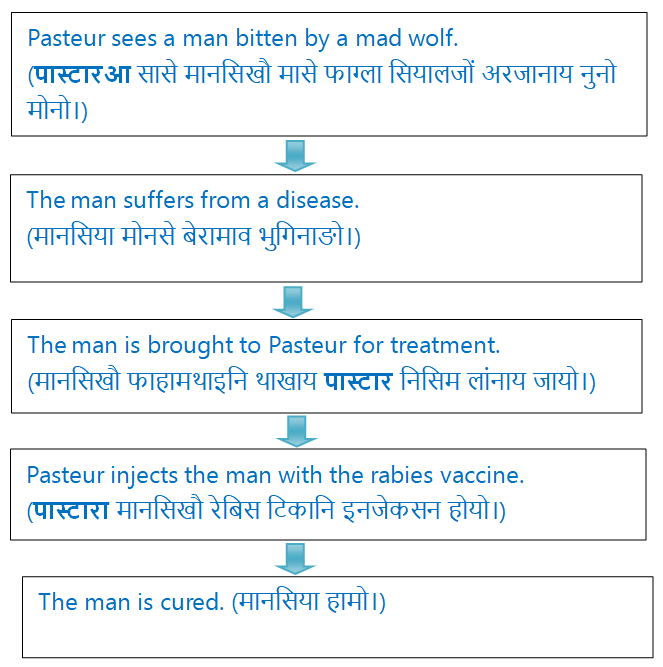
5. Here are some sentences from the lesson. (बेहाय फरानिफ्राय माखासे बाथ्राफोर दं।)
A man came running towards Louis Pasteur. The man was very frightened.
"What is the matter?" Louis asked him. Someone has been bitten by a mad wolf from the mountain.
Look at the words printed in italics.
Can you recall which grammatical structure is represented by the words in italics? Fill in the blank spaces provided below to give the answer.
The words printed in italics are in the P______________ voice.
Ans: The words printed in italics are in the Passive voice.
By changing the verb forms, the sentence can also be written in the following way:
(a) A mad wolf from the mountain has bitten someone.
This sentence is in the A _______________ voice.
Ans: This sentence is in the Active voice.
Now, read the lesson and find out other sentences in Active voice. Reframe these sentences if necessary. Then convert them into their Passive forms.
6. (a) Let's learn some tense forms:
We use the Simple Present tense
(i) to express universal truths:
Animals with rabies grow mad.
(ii) to express habitual or repeated action.
Louis Pasteur plays with his friends.
(iii) to indicate situations that are permanent:
He works in the institute.
(b) We use the Present Continuous tense to express an action that is presently going on:
He is working on his experiment.
(c) Now complete these sentences using the Simple Present or the Present Continuous forms of the verbs in brackets:
(दा बे बाथ्राफोरखौ Simple Present एबा Present Continuous महरफोरखौ बाहायना ब्रेकेटयाव होनाय थाइजाफोर (verbs)जों आबुं खालाम।)
(i) We ________________ football in the aftemoon. (play)
Ans: We play football in the aftemoon.
(जों बेलासिआव फुटबल गेलेयो।)
(ii) The sun _______________ in the east. (rise)
Ans: The sun rises in the east.
(सानआ सानजाहा ओंखारो।)
(iii) Don't make a noise ; the baby ______________ . (sleep)
Ans: Don't make a noise ; the baby is sleeping.
(दावराव-दावसि दाखालाम; खुदियाया उन्दुगासिनो दं।)
(iv) Someone _________________ at the door; can you hear it? (knock)
Ans: Someone is knocking at the door; can you hear it?
(सोरबा दरजायाव सौगासिनो दं, नों बेखौ खोनानो हादों ना?)
(v) The man _____________ towards the bus. (run)
Ans: The man is running towards the bus.
(बे मानसिया बास फारसे खारगासिनो दं।)
(vi) The bus usually ____________ at 8 o'clock. (come)
Ans: The bus usually comes at 8 o'clock.
(बासआ सरासनस्रायै 8 बाजियाव फैयो।
(vii) He _________ for an engineering entrance examination. (prepare)
Ans: He is preparing for an engineering entrance examination.
(बियो मोनसे इनजिनियारिं हाबग्रानि आनजादनि थाखाय थियारि जागासिनो।)
(viii) He __________ German. (learn)
Ans: He learns German .
(बियो जार्मान सोलोङो।)
7. (c) Let's see how much you have understood. Complete these sentences using the Simple Past or the Past Continuous forms of the verbs in brackets. (फै नायनि नों बेसेबां बुजियो। ब्रेकेटयाव थानाय थाइजा सोदोबफोरनि Simple Past एबा Past Continuous महरफोरखौ बाहायनानै बे बाथ्राफोरखौ आबुं खालाम।
(i) Louis Pasteur __________ in 1895. (die)
Ans: Louis Pasteur died in 1895.
(लुइस पास्टार आ 1895 मायथाइयाव रुंसारि जादोंमोन।)
(ii) Pasteur knew that the mad wolf ________ from rabies. (suffer)
Ans: Pasteur knew that the mad wolf suffered from rabies.
(पास्टारा मिथिदोंमोन दि फाग्ला सियालआ रेबिसजों सनदेरजानाय।)
(iii) When I reached his house, he ___________ lunch. (have)
Ans: When I reached his house, he was having lunch.
(जेब्ला आं बिनि न'आव सौहैदोंमोन, बियो ओंखाम जागासिनो दंमोन।)
(iv) I __________ last evening. (arrive)
Ans: I arrived last evening.
(आं थांनाय बेलासियाव सौफैदोंमोन।)
(v) The boys _________ football when it suddenly began to rain. (play)
Ans: The boys were playing football when it suddenly began to rain.
(जेब्ला अखाया हरखाबै हादोंमोन गथ'साफोरा फुटबल गेलेगासिनो दंमोन।)
8. Imagine you are the young boy who was bitten by the mad dog. You are telling your friends what happened when you were coming home from school. Fill in the gaps in the passage below with correct forms of the verbs to complete your story. (सानना नाय दि नोंथाङा बै उन्दै गथ' जाय फाग्ला सैमाजों अरजानायमोन। नों गावनि लोगोफोरनो मा जादोंमोन खिन्थायो दि जेब्ला नों फरायसालिनिफ्राय न'आव फैगासिनोमोन । गावनि सल'खौ आबुं खालामनो थाखाय गाहायाव होनाय लांदां खोनदोआव थाइजाफोरनि थार महरफोरजों आबुं खालाम।)
Yesterday I __________ (return) from school alone. On the way I __________
(see) a group of boys around a dog. The dog _______ (seem) to be mad, and
the boys _______ ________ (throw) stones at it. This _________ (make) the dog
angry and frightened. The dog ___________ (begin) to bark angrily. The boys
_________ (find) this very funny and they ______ (hit) the dog with a stick. I
______ ______ (stand) nearby quietly. Suddenly the dog _______ (rush) at me
and _________ (bit) me. I ________ (shout) to the boys to help me. But they
_________(run) away. The dog _______ (is) so angry that it ________ (will) not
let go of my leg. Finally, three men from a nearby shop _______ (come) out
and __________ (chase) the dog away.
Ans: Yesterday I returned from school alone. On the way I saw
a group of boys around a dog. The dog seemed to be mad, and
the boys were throwing stones at it. This made the dog
angry and frightened. The dog began to bark angrily. The boys
found this very funny and they hit the dog with a stick. I
was standing nearby quietly. Suddenly the dog rushed at me
and bit me. I shouted to the boys to help me. But they
ran away. The dog was so angry that it would not
let go of my leg. Finally, three men from a nearby shop came out
and chased the dog away.
(मैया आं फरायसालिनिफ्राय हारसिङै फैफिनदोंमोन। लामायाव आं मासे सैमानि सोरगिदिं गथ'फोरनि मोनसे हानजाखौ नुदोंमोन। सैमाखौ फाग्ला जानायबायदि नुदोंमोन, आरो गथ'फोरा बिनि सायाव अन्थाइ खुबैगासिनो दंमोन। बेयो सैमाखौ रागा जाहोदोंमोन आरो गिहोदोंमोन। सैमाया रागाजों सोंनो हमो। गथ'साफोरा बेखौ जोबोद मिनिथाव मोनो आरो बिसोरो सैमाखौ लावथिजों बुयो। आं खाथियाव सिरियै गसंना दंमोन। हरखाबै सैमाया आंनि फारसे गोख्रैयै खारबोदोंमोन आरो आंखौ अरदोंमोन। आं गथ'फोरखौ मददनि थाखाय गाबज्रिदोंमोन। नाथाय बिसोर खारलांदोंमोन। सैमाया ओरैबादि रागा जोंदोंमोन दि बियो आंनि आथिंखौ नागाराखैमोन। जोबनायाव, खाथिनि गलानिफ्राय साथाम मानसिफ्रा ओंखारबोयो आरो सैमाखौ गोजानाव होसोहरो।)
9. Here are a few words from the lesson. See if you can match the words to their meanings: (बेहाय फरानिफ्राय माखासे सोदोबफोर दं। नाय जुदि नोंथाङा सोदोबफोरखौ बिनि ओंथिजों गोरोबहोनो हागोन नामा।)


Ans:
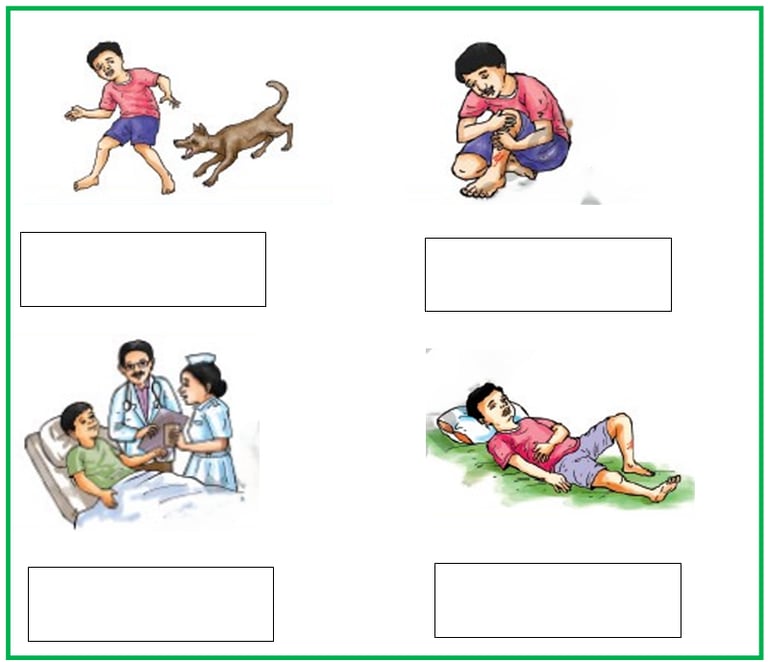
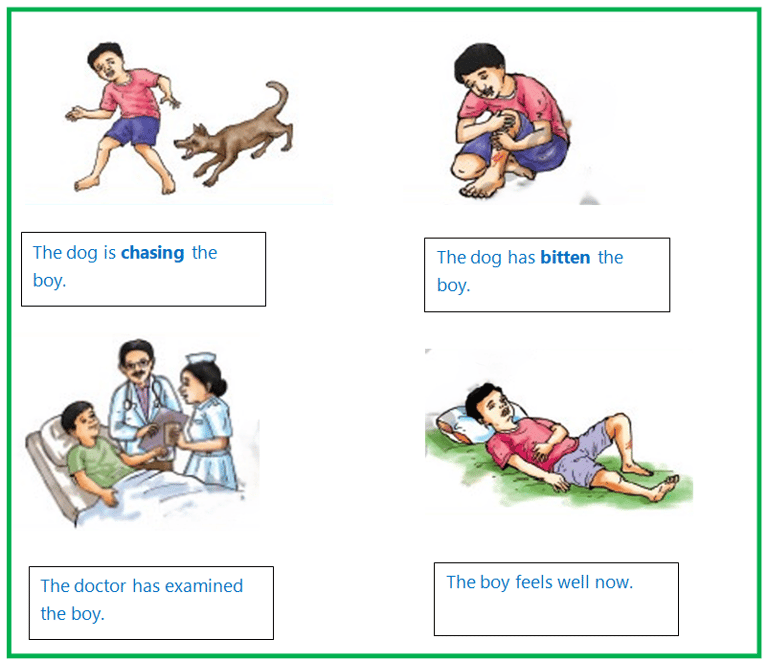
10. Look at the pictures given below. Write sentences in the boxes using words from the lesson to describe the pictures.
Ans:
11. Look at the following sentences. They are in Direct speech. Imagine you are reporting the conversation to someone. Rewrite the sentences in Indirect/Reported Speech.
(a) "What is the matter?" Louis asked him.
Ans: Louis asked him what the matter was.
(b) "Can you save my son?" the woman asked Louis.
Ans: The woman asked Louis if he could save her son.
(c) "I'll do whatever I can," said Louis to the boy.
Ans: Louis told the boy that he would do whatever he could.
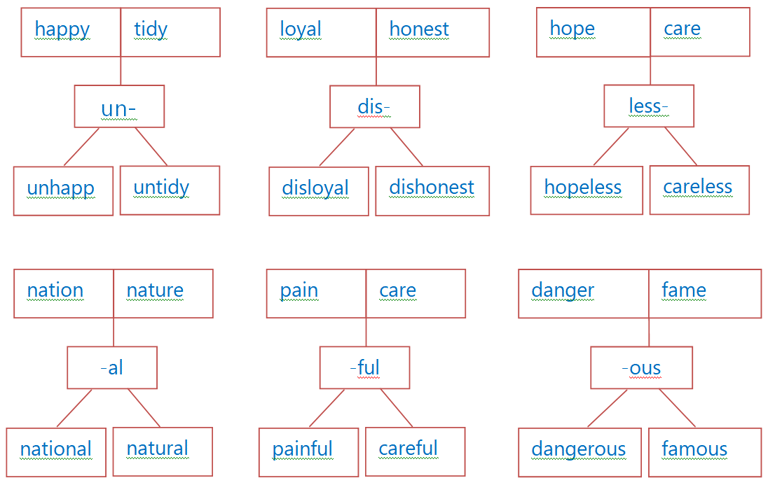
17. Refer to a dictionary or your text and give two examples of adjectives with the following prefixes or suffixes. (One is done for you.)
Ans: