Class 8 English Bodo Medium Question Answer – Lesson 4: "Dokchory learns about the Panchayat"
Lesson-4
Dokchory learns about the Panchayat
(द'क्च'री लार्न्स एबाउत दा पन्चायत)
(द'क्च'रीआ पन्चायतनि सोमोन्दै सोलोङो)
ACTIVITIES
1. Here are some words from the text and their meanings. Test your understanding by matching the words on the left with their meanings on
the right.
(बेवहाय बिजाबनिफ्राय माखासे सोदोबफोर आरो बिसोरनि ओंथिफोर दं। आगसिथिंनि सोदोबफोरखौ आगदाथिंनि ओंथिफोरजों गोरोबहोनायजों नोंनि बुजिनायखौ आनजाद नाय।)
institution - manner of goveming or ruling
elections - angry dispute, unfriendly relations with someone
sincerity - organisation or society
differently abled - the exercise through which we vote for new leaders
schemes - the money citizens of a country have to pay the government to help it do different kinds of work
substantial - plans
rural - large in size or amount
tax - relating to a village or the countryside
quarrel - having a physical or mental condition that makes it difficult for a person to do all the work that other people do
governance - devotion to a purposes
Ans:
institution - organisation or society
elections - the exercise through which we vote for new leaders
sincerity - devotion to a purposes
differently abled - having a physical or mental condition that makes it difficult for a person to do all the work that other people do
schemes - plans
substantial - large in size or amount
rural - relating to a village or the countryside
tax - the money citizens of a country have to pay the government to help it do different kinds of work
quarrel - angry dispute, unfriendly relations with someone
governance - manner of goveming or ruling
2. Complete the following sentences with information from the text:
(गाहायाव होनाय बाथ्राफोरखौ फरानिफ्राय खौरांजों आबुं खालाम: )
(a) Dokchory studies in Class _____________.
( द'क्च'रीआ थाखो ______ याव फरायो।)
Ans: Class VIII
(b) The name of her school is ______________.
(बिनि फरायसालिनि मुङा ______ )
Ans: Disangmukh Janajati High School
(c) Her father's name is__________.
(बिनि बिफानि मुङा __________ )
Ans: Konke Mili
(d) He works in the______________.
(बिथाङा _________ याव खामानि मावो।)
Ans: Panchayat
(e) Dokchory goes to school on_____________.
(द'क्च'रीया फरायसालियाव ___________ थाङो।)
Ans: her father’s bicycle
(f) She loves the ride because she__________.
(बियो सालायनायखौ मोजां मोनो मानोना बियो _________ )
Ans: gets to know new things every day
(g) To contest the Panchayat elections, one has to be ________ years old.
(पनसायत बिसायख'थिखौ जुजिनो थाखाय, सासेआ ________ बोसोर बैसोनि जानांगौ।)
Ans: 21
3. Answer the following questions to understand the text better:
(फराखौ मोजाङै बुजिनो थाखाय गाहायाव होनाय सोंथिफोरनि फिन हर।)
(a) What was the meaning of Panchayat long ago?
(गोबां बोसोर सिगां पन्चायतनि ओंथिया मामोन?)
Ans: Long ago, Panchayat meant a system of governance by five village elders called Panch Gramin Pramukhs, whose word was the rule in the village.
(गोबां बोसोर सिगां, पन्चायतनि ओंथिया मोनबा गामिनि बैसोगोराफोर जायखौ पंच ग्रामिन प्रमुख बुंनाय जायोमोन, जायनि सोदोबा गामियाव खुंथायमोन।)
(b) What is the meaning of Panchayat now? (दा पन्चायतनि ओंथिया मा?)
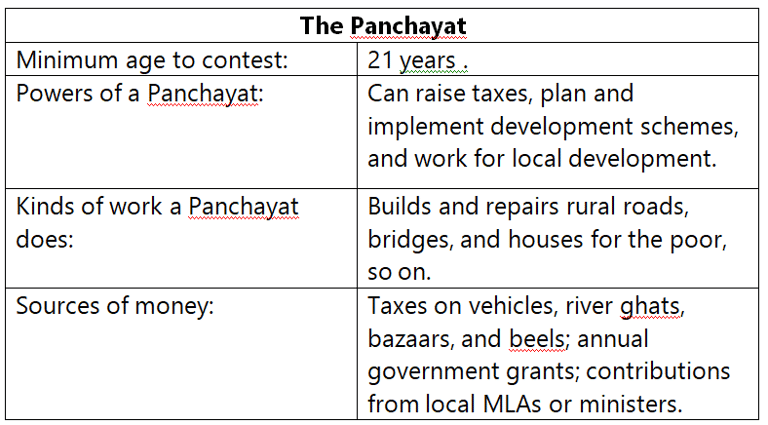
Ans: Nowadays, Panchayat means the body responsible for the development of villages, where anyone above 21 can contest elections.
(आथिखालाव पन्चायतनि ओंथिया गामिफोरनि जौगानायनि थाखाय बिबान गोनां आफाद, जेराव 21 बोसोरनि गोजौनि जायखिजाया सुबुंआ बिसायख 'थि गेलेनो हायो।)
(c) What kind of work is done by the Panchayat? (पन्चायतआ मा बायदि हाबा मावो?)
Ans: The Panchayat builds and repairs rural roads, bridges, and houses for the poor, and so on.
(पन्चायतआ गामियारि लामाफोर, दालांफोर आरो निखावरिफोरनि थाखाय नफोर आरो बायदि बायदि बानायो आरो फाहामो।)
(d) From where does the Panchayat get money to perform all its work?
(पन्चायतआ गावनि गासैबो खामानिखौ मावनो थाखाय रां बबेनिफ्राय मोनो?)
Ans: The Panchayat gets money from local taxes on vehicles, river ghats, bazaars, and beels, as well as from annual government grants and contributions from local MLAs or ministers.
(पन्चायतआ गारिफोर, दैमा घाटफोर, बाजारफोर आरो बिलफोरनि सायाव जायगायारि खाजोनाफोरनिफ्राय रां मोनो, लोगोसे बोसोरारि सोरखारि मदद आरो जायगायारि एम. एल. एफोर एबा मन्थ्रिफोरनिफ्राय बिहोमाफोरनिफ्राय रां मोनो।)
(e) How did the Panchayat help Dhaniram? (पन्चायतआ धनीरामखौ बोरै मदद होदोंमोन?
Ans: The Panchayat helped Dhaniram by building a house for him.
(पन्चायतआ धनीरामनि थाखाय गंसे न 'लुनायजों मदद होदोंमोन।)
(f) How did Dhaniram spend the cold December nights? (धनीरामआ दिसेम्बरनि गुसु हरफोरखौ बोरै हगारहरदोंमोन?)
Ans: Dhaniram spent the bitter cold December nights on the open verandah of the school building.
(धनीरामा जोबोद गुसु दिसेम्बरनि हरफोरखौ फरायसालि बिल्दिंनि गेवनाय बारान्दायाव हगारहरदोंमोन।)
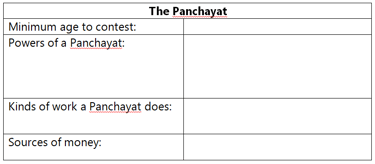
4. You have just read about the Panchayat. Using information from the lesson, fill in the table below:
(नोंथाङा बावैसो पन्चायतनि सोमोन्दै फरायबाय। फरायनायनिफ्राय खौरां बाहायनानै, गाहायाव होनाय टेबोलखौ आबुं खालामः)

Ans:
5. The morning assembly of Disangmukh Janajati High School begins at 8.45 every day. Each student of the school has to deliver a speech according to a roster prepared by the school authorities. When Dokchory's turn came she gave the following speech:
(दिसांमुख जनजाति गोजौ फरायसालिनि फुंनि जुथुमआ सानफ्रोमबो 8:45 निफ्राय जागायो। फरायसालिनि मोनफ्रोमबो सोलोंसाया फरायसालि मावख 'गिरिफोरजों थियारि खालामजानाय मोनसे रोस्टार बायदियै मोनसे बिबुंथि होनांगौ जायो। जेब्ला द'क्च'री नि फाला फैदोंमोन अब्ला बिथाङा गाहायाव होनाय बिबुंथिखौ होदोंमोन: )
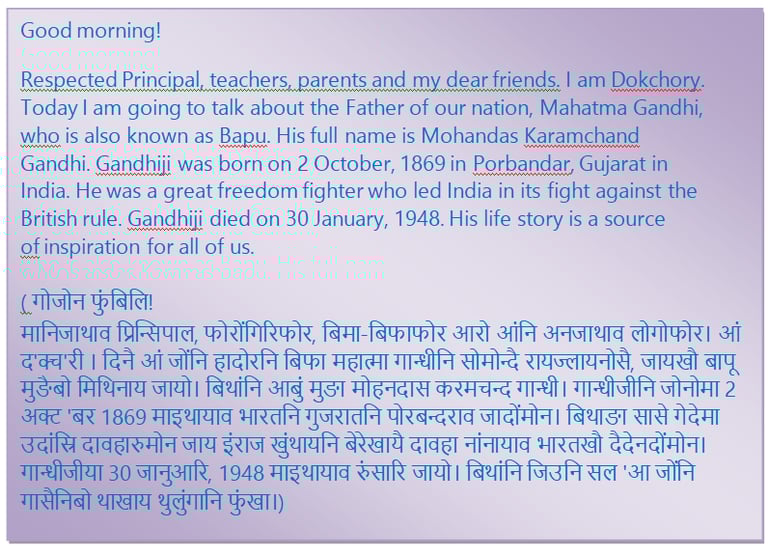
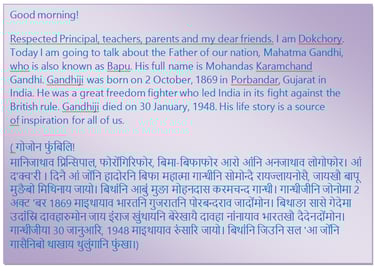
Imagine that your turn to deliver a speech for the morning assembly is tomorrow. Prepare your own speech using Dokchory's example, and present it in the class.
- Your teacher will ask each student to deliver the speech one by one.
(सानना नाय दि फुंनि जथुमानि थाखाय बिबुंथि होनायनि नोंनि फालाआ गाबोन। द'क्च'री नि बिदिन्थिखौ बाहायनानै गावनि बिबुंथिखौ थियारि खालाम आरो बेखौ थाखोयाव दिन्थि।
-नोंनि फोरोंगिरिआ मोनफ्रोमबो सोलोंसाखौ सासे-सासेयै बिबुंथि होनो थाखाय बुंगोन।)
Ans:
Good morning!
Respected Principal, teachers, parents and my dear friends. I am Mina.
Today I am going to talk about Upendra Nath Brahma, who is known as the “Father of the Bodo people”. He was born on 31 March, 1956 at Boragari village in Kokrajhar district, Assam. Upendra Nath Brahma was a great social reformer and leader who worked tirelessly for the rights, education, and cultural identity of the Bodo community.
He believed that education was the most powerful tool for uplifting society and often said, “Educate, unite, and fight”. His leadership and sacrifice inspired many people to work for peace, unity, and development in the region.
Upendra Brahma passed away on 1 May, 1990, but his life and ideals continue to guide the Bodo people. We remember him with respect and gratitude for his dedication to the community and the nation.
(गोजोन फुंबिलि!
मानिजाथाव प्रिन्सिपाल, फोरोंगिरिफोर, बिमा-बिफाफोर आरो आंनि अनजाथाव लोगोफोर। आं मिना। दिनै आं उपेन्द्र नाथ ब्रह्मनि सोमोन्दै रायज्लायनोसै, जायखौ "बर' हारिनि बिफा" होन्ना मिथिनाय जायो। बिथांनि जोनोमा 31 मार्च, 1956 माइथायाव कक्राझार जिल्ला, आसामनि बरागड़ी गामियाव जादोंमोन। उपेन्द्र नाथ ब्रह्मया सासे गेदेमा समाज फोसाबगिरि आरो दैदेनगिरिमोन, जाय बर' हारिनि मोनथाय, सोलोंथाय आरो हारिमुआरि सिनायथिनि थाखाय मेंनाय गैयाजासे खामानि मावदोंमोन।
बिथाङा फोथायोमोनदि सोलोंथायानो समाजखौ जौगाहोन्नायनि थाखाय बयनिख्रुइबो गोहोगोरा आगजुमोन आरो गोबां समावनो बुङोमोन, "सोलोंथाय हो, ज 'जा आरो दावहा नां।" बिथांनि दैदेनग्रा आरो बावसोमनाया गोबां सुबुंफोरखौ बे ओनसोलाव गोजोन, गोरोबनाय आरो जौगानायनि थाखाय खामानि मावनो थुलुंगा होदोंमोन।
उपेन्द्र ब्रह्माया 1 मे, 1990 मायथाइयाव रुंसारि जादोंमोन, नाथाय बिथांनि जिउ आरो आदर्शफोरा बर' हारिनि सुबुंफोरखौ लामा दिन्थिगासिनो दं। सुबुं समाज आरो हादोरनि फारसे बिथांनि बावसोमनायनि थाखाय जों बिथांखौ सनमान आरो बाखनायनायजों गोसोखांदों।
6. Discuss in small groups: (फिसा-फिसा हानजायाव सावराय।)
(a) If you want to help the needy, would it be fine to do it immediately? Why or why not? (जुदि नोंथाङा गोनांथि गोनांफोरखौ हेफाजाब होनो सानो, अब्ला बेखौ थाबैनो खालामनाया मोजां जागोन नामा? मानो एबा मानो नङा?)
Ans: Yes, it is good to help the needy immediately because timely help can reduce their suffering and solve urgent problems. Delaying help may make their situation worse.
(नंगौ, गोनांथि जानायफोरखौ थाबनो मदद खालामनाया मोजां मानोना समाव मदद खालामनाया बिसोरनि दुखुखौ बाङाइ खालामनो हायो आरो हरखाब जेंनाफोरखौ फोजोबनो हायो। मददखौ गोबाव खालामनाया बिसोरनि थासारिखौ गाज्रिसिन खालामनो हागौ।)
(b) How would you like to help a person with special needs? Share your ideas in your group. (जुनिया गोनांथि गोनां सुबुंखौ नों बोरै मदद खालामनो लुबैदों? गावनि सानदांथिफोरखौ गावनि हानजायाव रानलाय।)
Ans: I would help a person with special needs by teaching them daily chores, reading to them, playing games with them, and encouraging them to learn skills so they can live independently and with dignity.
(आं जर 'खा गोनांथि गोनां सुबुंखौ सानफ्रोमबोनि हाबाफोरखौ फोरोंनानै, बिसोरनो फरायनानै, बिसोरजों गेलेमु गेलेनानै आरो बिसोरनो रोंग' थि सोलोंनो थुलुंगा होनानै हेफाजाब होगोन जाहाथे बिसोरो उदां आरो सनमानजों थांना थानो हायो।)
(c) Did Konke Mili plan the right thing to help Dhaniram? Give more suggestions.
(क'न्के मिलीया धनीरामखौ मदद खालामनो थाखाय थि सानथांखि लादोंमोन नामा? गोबां सुबुरुनफोर हो।)
Ans: Yes, Konke Mili planned the right thing by building a home for people with special needs like Dhaniram. Additionally, the Panchayat could arrange regular medical check-ups, provide vocational training, and create opportunities for them to earn a livelihood.
(नंगौ, क'न्के मिलीआ धनीराम बायदि जर'खा गोनांथि गोनां सुबुंफोरनि थाखाय न' लुनायजों थार बाथ्राखौ सानथांखि खालामदोंमोन। बिनि अनगायै, पनचायतआ नेमबादि सावस्रियारि आनजाद नायनायनि राहा खालामनो हायो, फालांगियारि फोरोंथायखौ होनो हायो आरो बिसोरनि थाखाय जिउ खांनायनि खाबुफोर सोरजिनो हायो।
7. Dokchory will work for the Panchayat when she finishes school. Write a paragraph on what you will do for your village or town when you grow up.
(द'क्च'रीया फरायसालि फोजोबनायनि उनाव पञ्चायतनि थाखाय खामानि मावो। जेब्ला नोङो गिदिर जागोन अब्ला नोङो गावनि गामि एबा सोहोरनि थाखाय मा खालामगोन बेनि सायाव मोनसे दफा लिर।)
Ans: When I grow up, I will work for the Panchayat to make my village a better place. I will help build good roads, bridges, and safe houses for the poor. I will make sure that every child gets a chance to go to school and that there are health centres for all. I will also work to keep the village clean and green by planting trees and arranging waste management. I will listen to the problems of the villagers and try to solve them quickly so that everyone can live happily and peacefully.
(जेब्ला आं देरगोन, आं आंनि गामिखौ मोनसे साबसिन जायगा खालामनो थाखाय पञ्चायतनि थाखाय खामानि मावगोन। आं निखावरिफोरनि थाखाय मोजां लामाफोर, दालांफोर आरो रैखाथि गोनां नफोर बानायनायाव मदद खालामगोन। आं बेखौ थि खालामगोन दि मोनफ्रोमबो गथ 'फोरा फरायसालि थांनो खाबु मोनो आरो गासिबोनि थाखाय सावस्रि मिरुफोर दं। आं बिफां गायनाय आरो गारनाय मुवाफोरखौ सामलायनायनि राहा खालामनानै गामिखौ साखोन-सिखोन आरो सोमखोर लाखिनो थाखायबो खामानि मावगोन। आं गामिनि सुबुंफोरनि जेंनाफोरखौ खोनासगोन आरो बिसोरखौ थाबनो फोजोबनो नाजागोन जाहाथे गासैबो गोजोन आरो गोजोनजों थानो हायो।)
8. In class VII you learnt about Reported Speech and Reporting Verbs. In this lesson, we see more of such sentences.
(7थि थाखोयाव नोंथाङा फोरमायजानाय बिबुंथि आरो फोरमायजानाय सोदोबफोरनि सोमोन्दै सोलोंदोंमोन। बे फरायनायाव जों बेबादि गोबां बाथ्राफोरखौ नुनो मोनो।)
Look at this sentence from the lesson:
She said to her father, "What is a Panchayat?"
The reported clause starts with a 'wh' question. Wh words are who, when, whom, whose, what, where, which, why and how. A wh-question is changed into the indirect form by using the question word at the beginning of the reported clause.
e.g. She asked her father what a Panchayat was.
Let's practise changing other questions into the reported form:
(a) She said to her father, "What kind of work do you do?"
(b) She said to her father, "Where do you get all the money from?"
(c) She said to her father, "Is that money enough to do so much work?"
(d) She asked him, "Why don't you build a house for poor Dhaniram?"
(e) She said to him, "What is a Panchayat?"
Now read this sentence. It is another type of reported sentence:
(a) She said to her father, "Do something for the old man."
Here the reported clause is an Imperative sentence. In an imperative sentence,
the subject, which is usually the second person 'you', is generally left unwritten.
(b) Do something for the old man. (= You do something for the old man.)
There are other types of imperatives such as negative and emphatic
imperatives. For example, the imperative sentence
(c) Come in please.
can be turned into:
Negative: Don't come in, please.
Emphatic: Do come in, please.
Find out how much you have understood. Change the following imperative
sentences into their negative and emphatic forms:
(a) Repair the roads.
Ans: Negative: Don’t repair the roads.
Emphatic: Do repair the roads.
(b) Build a house for Dhaniram.
Ans: Negative: Don’t build a house for Dhaniram.
Emphatic: Do build a house for Dhaniram.
(c) Work for local development.
Ans: Negative: Don’t work for local development.
Emphatic: Do work for local development.
(d) Close the door, please.
Ans: Negative: Don’t close the door, please.
Emphatic: Do close the door, please.
(e) Please wash your hands.
Ans: Negative: Don’t wash your hands, please.
Emphatic: Do wash your hands, please.
9. Say the words in the box aloud:
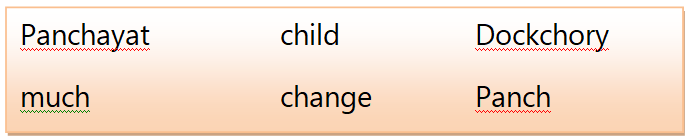

Did you notice that they all have the sound ch?
Now, find other words from the lesson which have similar ch sound in
them. Write them in your notebook. Add a few more and practise saying them aloud.
10. Here is a crossword puzzle for you to find out the adjectives (describing words) in the puzzle to fill up the blanks on the right. One is done for you.
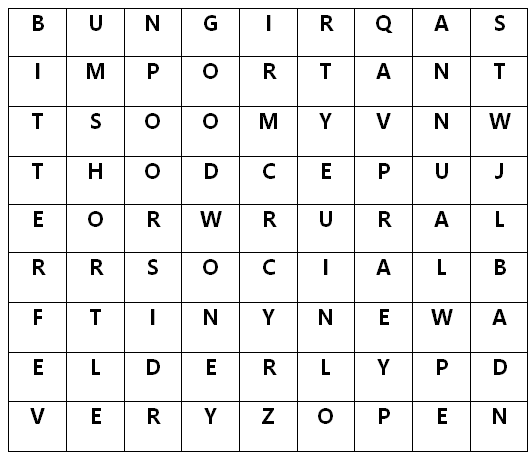
(a) open verandah
(b) grant
Ans: annual grant
(c) roads
Ans: rural roads
(d) institution
Ans: tiny institution
(e) things
Ans: good things
(f) change
Ans: social change
(g) questions
Ans: important questions
(h) cold
Ans: bitter cold
11. Let's play a game. Look at the following pairs of words quickly. Each pair looks the same, but are different in meaning as well as in spelling. The different meanings are given against each pair. Fill in the blanks by putting in one or two letter(s) to show the difference in spelling. The one who completes it first will be the winner.
(a) d______ry : a record of everyday's events or thoughts
Ans: diary : a record of everyday's events or thoughts
d______ry : a place where milk is processed to make different milk products
Ans: dairy : a place where milk is processed to make different milk products
(b) w_________ ther : temperature of a place
Ans: weather : temperature of a place
w_________ ther : expressing a doubt
Ans: whether : expressing a doubt
(C) l_________ ke : a large area of water
Ans: lake : a large area of water
l_________ ke : similar to
Ans: like : similar to
(d) w_________sh : to make something clean by using water
Ans: wash : to make something clean by using water
w_________sh : to want something to happen
Ans: wish: to want something to happen
(e) n_________ w : fresh, not old or used
Ans: new : fresh, not old or used
n_________ w : the present time
Ans: now : the present time
12. Rupalee Chetia is a contestant for President in the coming Panchayat
election. In groups, design a poster seeking votes for her victory.
Ans:

